
Can You Stamp or Resurface Existing Concrete?
Ask around about stamping an old patio and somebody will tell you it can't be done. Stamped concrete happens in wet concrete, they'll say, so the old slab has to go. So can you stamp existing concrete? Yes, with one twist. The stamp does go into a fresh layer, but it doesn't have to be a whole new slab. We've spent more than 20 years remaking existing concrete across Kennesaw and metro Atlanta without tearing any of it out. The trick is what goes on top.
Can you stamp concrete that's already been poured?
Not directly. A stamp works by pressing a textured mat into concrete while it's still soft, and your patio set a long time ago. What changes the answer is an overlay. An overlay is a thin layer of polymer-modified cement that bonds to the slab you already have. While that layer is still workable, we press the pattern into it. Colored and sealed, it's stamped concrete, sitting on top of your old slab.
No demolition crew, no dumpster in the yard. James, our owner and lead designer, will tell you he hates to pour concrete. He'd much rather take the slab that's already there and turn it into something you want to sit on.
Two ways to remake the slab you already have
Both start the same way. We grind and clean the surface so the new layer has bare, sound concrete to grab on to. After that, the finish is up to you.
A plain overlay
This is resurfacing in its simplest form. A fresh layer goes down smooth or lightly textured, then gets colored and sealed. It gives a stained, worn, or patchy patio a clean, even surface in the color you pick.
A flagstone stamped overlay
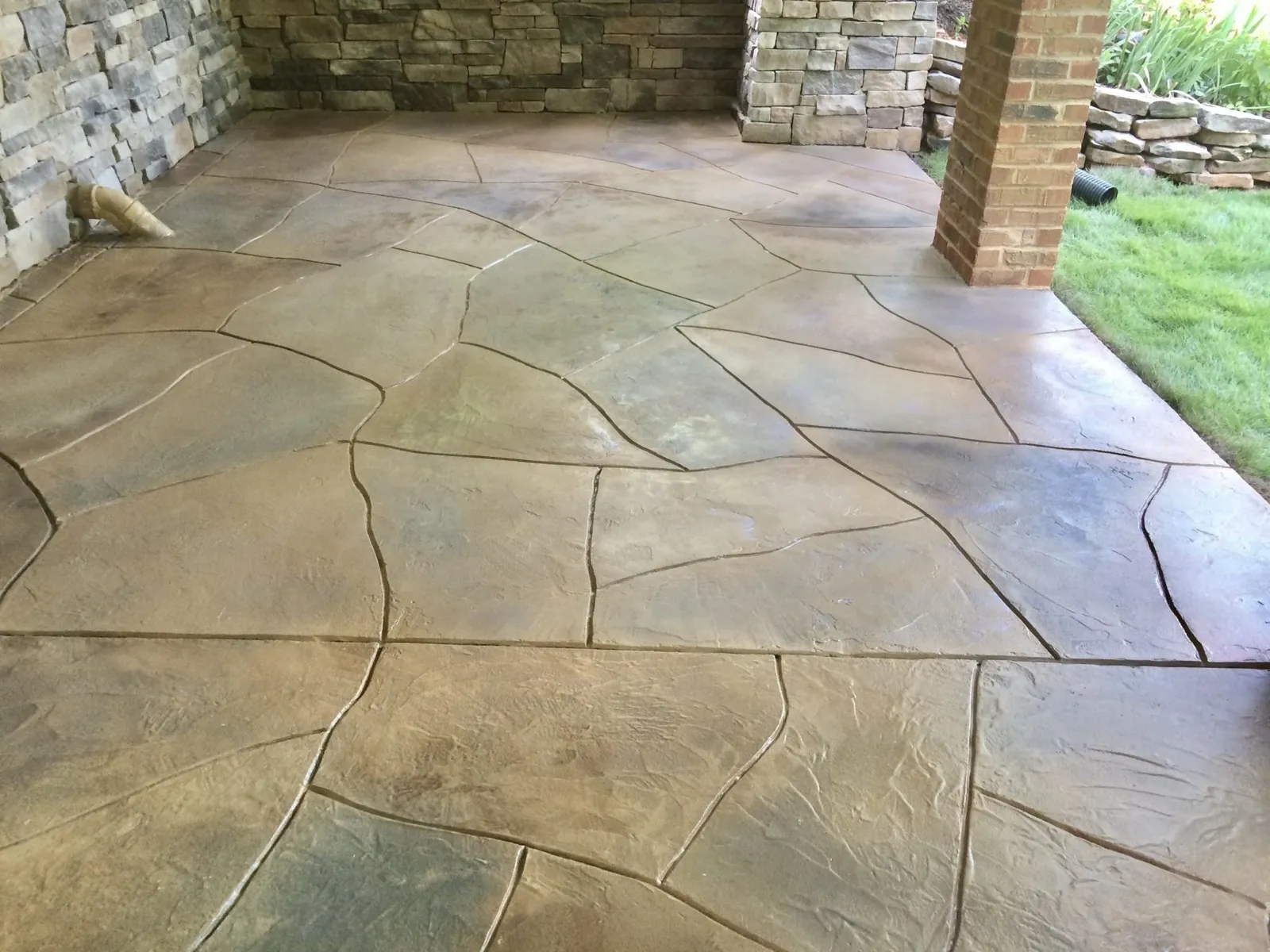
This is the one most people picture when they say "stamped concrete." We stamp one pattern, random flagstone, and we've gotten very good at it. After stamping, we color it in more than one tone so each stone has some depth, then lock it all in under a clear sealer. The color sits on top of the overlay under that sealer, so the color you approve is the color you get.
What happens to the cracks?
Cracks in concrete fight to come back. If you just cover one with a smooth layer, there's a good chance it shows up again in the same spot.
So we don't try to hide them. With a flagstone pattern, we lay out the stones so the existing cracks run along the joints between them. The crack becomes a grout line, and it's part of the design instead of a flaw you keep staring at. It's a big reason flagstone suits older patios so well.
There's a limit, and we'd rather say it up front. A slab that's crumbling, sinking, or still moving isn't a good candidate for any overlay. We don't do tear-outs or new pours, so if your concrete is past that point, we'll tell you plainly instead of selling you something that won't hold up.
What's the cheapest way to cover a concrete patio?
Start with the material you already own: the slab. Covering it with something new means buying that material and paying to lay it down. Tearing the slab out costs the most, since you pay for demolition and hauling before anything new goes in.
Finishing the concrete itself skips most of that. Here's roughly how the options line up, from the lightest touch to the most work:
- Clean, color, and seal. For a decent surface that mostly needs a new color.
- A plain overlay. A new surface over the old one, for patios that are worn or patchy.
- A flagstone stamped overlay. The most detail and the most color work, so it takes the most time.
The shape your slab is in moves the price more than the finish does. Clean concrete needs very little prep. A patio with an old coating on it, or a rough, worn surface, needs heavy grinding before anything else can happen. Size and the number of colors matter too. For the full breakdown, see what drives the cost of patio resurfacing.
Which finish fits your patio?
A few rules of thumb:
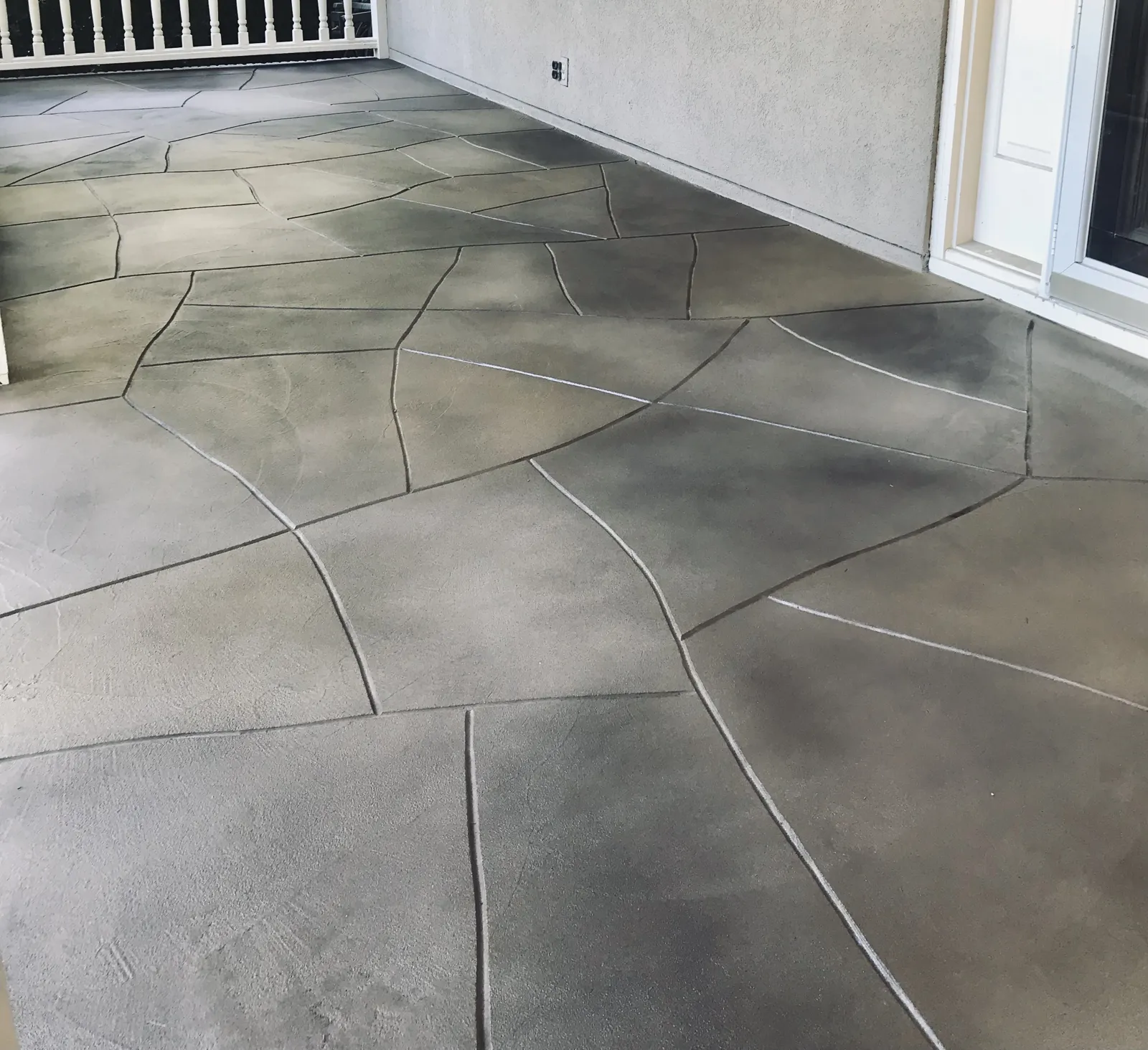
- Lots of cracks? Go with flagstone. The pattern puts them to work.
- Sound slab, tired color? Staining and sealing, or a plain overlay, may be all you need.
- Want the patio to be the first thing guests notice? Flagstone, with a color picked to go with your house.
You can see more finished work on our page about stamped concrete overlays in Atlanta, or read how our concrete overlays work from prep to sealer. Whatever you pick, outdoor concrete needs a fresh coat of sealer every two to three years to keep the color protected.
Getting a quote
You don't need to wait for a visit. Most of the time we can give you a number over the phone. Here's what helps:
- A rough size. Length times width is close enough.
- A few photos in good light, including one close-up of the surface and any cracks.
- Any old coating? If the patio was ever painted or sealed with something, tell us.
- The look you like: smooth or flagstone.
If your job needs a closer look, we'll set a time that works for you. Want to see color options first? Browse our concrete staining services in metro Atlanta, then call us for a free, no-pressure quote.
Frequently asked questions
Can you stamp concrete that has already been poured?
Not the slab itself. Traditional stamping happens while concrete is still wet. What you can do is put a stamped overlay on top: a thin layer of new cement material bonds to your existing slab, and the flagstone pattern is pressed into that layer while it's workable. You get the stamped look with no tear-out and no new pour.
Can you put a stamped overlay over cracked concrete?
Usually, yes. Cracks in concrete tend to come back, so we don't try to hide them under a smooth layer. We lay out the flagstone pattern so the cracks fall along the joints between the stones and become part of the design. A slab that is crumbling, sinking, or still moving is a different story, and we'll tell you if yours isn't a good fit.
Is an overlay cheaper than pouring new concrete?
In almost every case, yes. You skip tearing out the old slab, hauling it away, and pouring a new one. The biggest thing that moves the price is the shape your slab is in: clean concrete needs little prep, while old coatings or a rough surface need heavy grinding first. We can usually give you a number over the phone.
How often does an outdoor overlay need to be resealed?
Every two to three years. Sun and rain wear on the clear sealer that protects the color, so outdoor concrete needs a fresh coat of sealer on that schedule. Indoor floors are different and don't need a return visit from us.