
Discolored Concrete? How to Recolor What You Have
Maybe your patio has gone chalky and pale. Maybe the pool deck has dark patches that no amount of scrubbing will lift, or a basement floor came out blotchy the day it was poured. If that sounds like your concrete, you're not stuck with it. The good news is that the slab underneath is usually fine. It's the surface that looks tired, and the surface is exactly what we work on. We've been recoloring concrete across Kennesaw and metro Atlanta for more than 20 years, so here's how it works.
Why does concrete get discolored?
Most discoloration comes from a handful of everyday things, and none of them mean your concrete is going bad:
- Sun and weather. Outdoor concrete fades over time, especially where it gets full afternoon sun.
- An old finish wearing thin. If the slab was colored or sealed years ago, high-traffic paths wear down first and the rest stays darker.
- Pours from different days. An add-on section or a patched spot almost never matches the original slab.
- Things that sat on it. Rust from furniture, leaves left through the winter, planters, grills, and mildew in shady corners all leave marks.
- How it was poured. Some concrete comes out blotchy from day one, and no cleaner will change that.
Cleaning helps with dirt. It won't bring back color that's gone, and it won't even out a slab that was never even to begin with. That's where recoloring comes in.
Can you recolor existing concrete?
Yes, and it's what we do every day. We don't pour new concrete. Every job starts with the slab you already have.
Here's how it works: the new color sits on top. We get the surface clean and sound, build the color on top of the prepared concrete, and lock it in under a clear sealer. That sealer is what protects the color and gives it depth. Here's how long stained concrete lasts and how to care for it.
What about old concrete? Can you stain old concrete that's been outside for twenty years? Usually, yes. Age matters less than condition. A clean slab needs light prep. One with old sealer, old color, or some kind of coating needs more grinding before anything new goes down, because the new finish has to bond to the concrete itself.
How to change the color of concrete, step by step
- Prep the surface. We clean the concrete and remove anything that would get in the way, like old sealer or a worn finish. This step decides how good the result looks.
- Pick the color together. Warm browns, tans, grays, deep charcoals, or a custom blend. You can go with one even color or a mottled, stone-like look.
- Settle the color. Before the job starts, we settle the color with you, so there are no surprises.
- Build the color and seal it. The color goes on the prepared surface, then the clear sealer goes over the top to lock it in.
The color you approve is the color you get

Nobody wants to hold their breath on a color you'll look at every day.
That's why we settle the color before any work starts. Think about your own light and what sits next to the concrete: your house, your brick, your pool coping. A color can look very different on a sunny patio than on a shaded one. Once you've signed off, that's the color we put down.
It also helps if you're matching something. If you want the new patio to pick up the tan in your stone wall, or the gray in your siding, we can work toward that and show you before we commit.
Here's one of ours. This pool deck, the one with the stone waterfall, started out a light tan. We didn't tear anything out or change the pattern. We changed the color, taking the whole deck to a deeper brown.
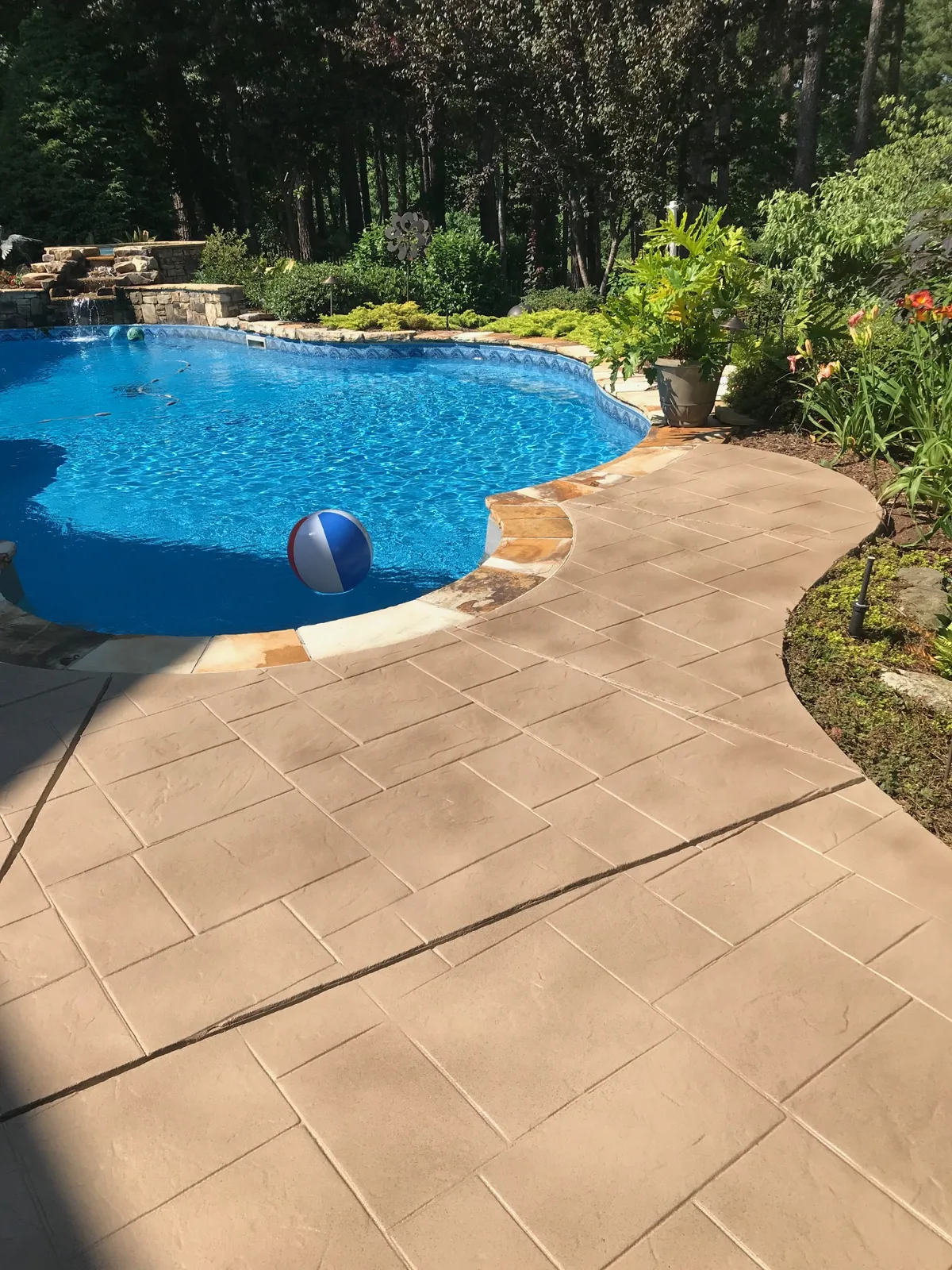
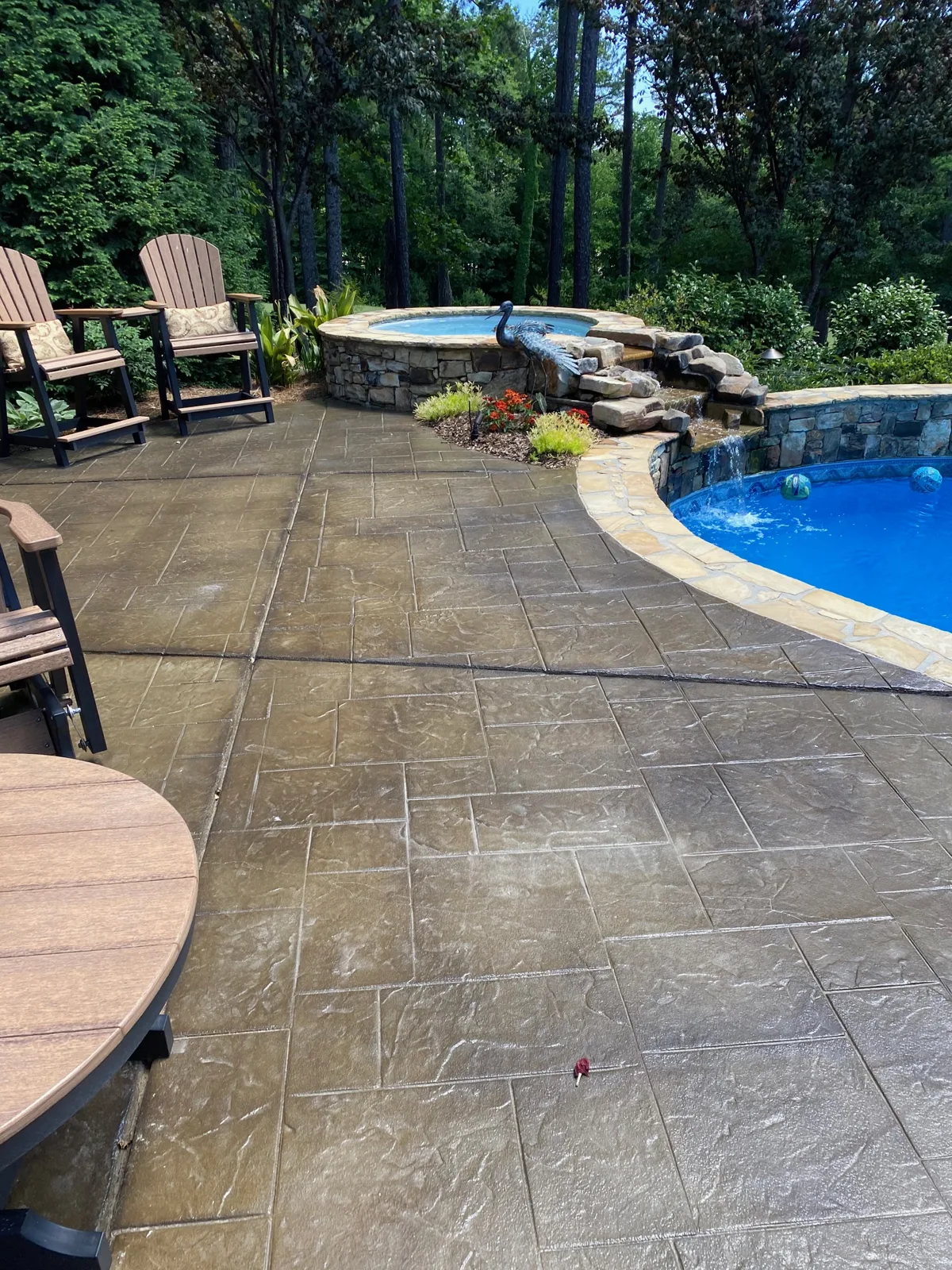
Want to see what's possible? Our before-and-after photos show real slabs we've taken from tired to finished.
What about cracks?
Let's be honest about this one. A new color won't make cracks disappear, and cracks in concrete tend to come back no matter what gets put in them. Our answer is a flagstone pattern that works the cracks into the design, so they look like they belong there instead of standing out. If your patio has a few cracks, mention them when you call and we'll talk through how they'll look.
Keeping your new color looking good
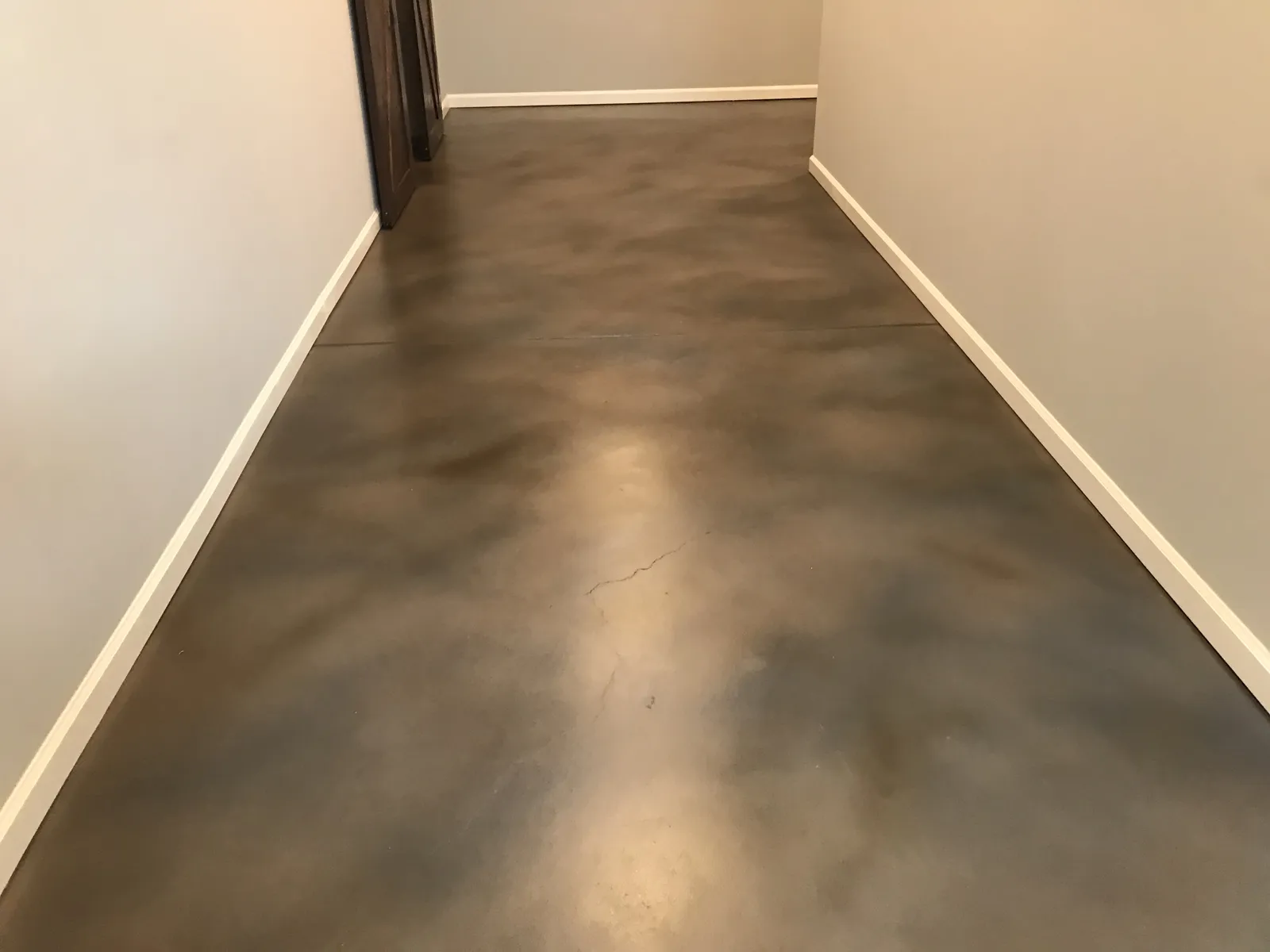
Outdoor concrete takes sun, rain, and foot traffic all year. To keep the color rich, plan on resealing it every two to three years.
Indoor floors are easier. With no weather working on them, they don't need a return visit from us. We set you up with a simple system so you can refresh the finish yourself whenever you'd like.
For everyday cleaning, keep it gentle. Outside, a broom and a garden hose are plenty, and a light pressure wash is fine if you like one. Inside, use vinegar and water. Skip the household cleaners, because harsh products are what dull a sealed finish over time.
What does it cost to recolor concrete?
Working with the concrete you already have costs far less than tearing it out and pouring new. Indoors, staining usually runs at least half the cost of wood, tile, or carpet.
From there, the slab you start with moves the price more than anything. A clean slab with no old finish needs little prep. One with old sealer, old color, or a coating needs heavier grinding first. Size and the look you choose matter too, since a single even color takes less time than a detailed, multi-tone finish.
Most of the time we can give you a number over the phone. Send a few photos in good light and a rough square footage, and that's usually all we need. If your patio needs some extra attention, take a look at our patio staining and resurfacing page, or learn more about our concrete staining services in metro Atlanta. Then call us for a free, no-pressure quote.
Frequently asked questions
Can you recolor existing concrete?
Yes. Existing concrete can get a whole new color without tearing it out. The surface is cleaned and prepped, the color is built on the prepared concrete, and a clear sealer locks it in. Patios, pool decks and interior floors are all good candidates.
Can you stain old concrete?
Yes. Age matters less than condition. A clean, sound slab needs light prep, while concrete with old sealer, old color or a coating on it needs more grinding before new color goes down. That prep is what changes the price from one job to the next.
How do I know the new color will look the way I want?
You pick and approve the color before any work starts, so there are no surprises. The color you approve is the color you get.
How long does recolored concrete last outside?
Outdoor concrete takes sun and rain, so plan on resealing it every two to three years to keep the color looking rich. Indoor floors are different. They don't need a return visit from us, and we set you up so you can refresh the finish yourself.
How much does it cost to recolor concrete?
Working with the concrete you already have costs far less than tearing it out and pouring new. Indoors, staining usually runs at least half the cost of wood, tile or carpet. The condition of your slab moves the price most, and we can often give you a number over the phone.